This post contains affiliate links. As an Amazon Associate, I earn from qualifying purchases — at no extra cost to you.
Nobody decorates the staircase. It’s the room everyone owns and no one claims — a passage between the rooms that get the attention, painted whatever the hallway was painted, lit by whatever the builder left. And yet when I look at the interiors that stop me, the staircase keeps showing up. Not as background. As the argument.
There’s a reason for that. A staircase is the one place in a house where you’re moving — where the light changes as you climb, where a wall reveals itself in passing rather than all at once. It rewards darkness and pattern in a way a sitting room can’t, because you never stand still long enough for it to become wallpaper in the dismissive sense. It stays an event.
So this is a post about staircase decor for people who suspect the darkest corner of the house might secretly be the best one. As with the kitchen, none of it requires a renovation — a staircase transforms with paint, paper, one light, and one long piece of wool.
Let the wall do the work
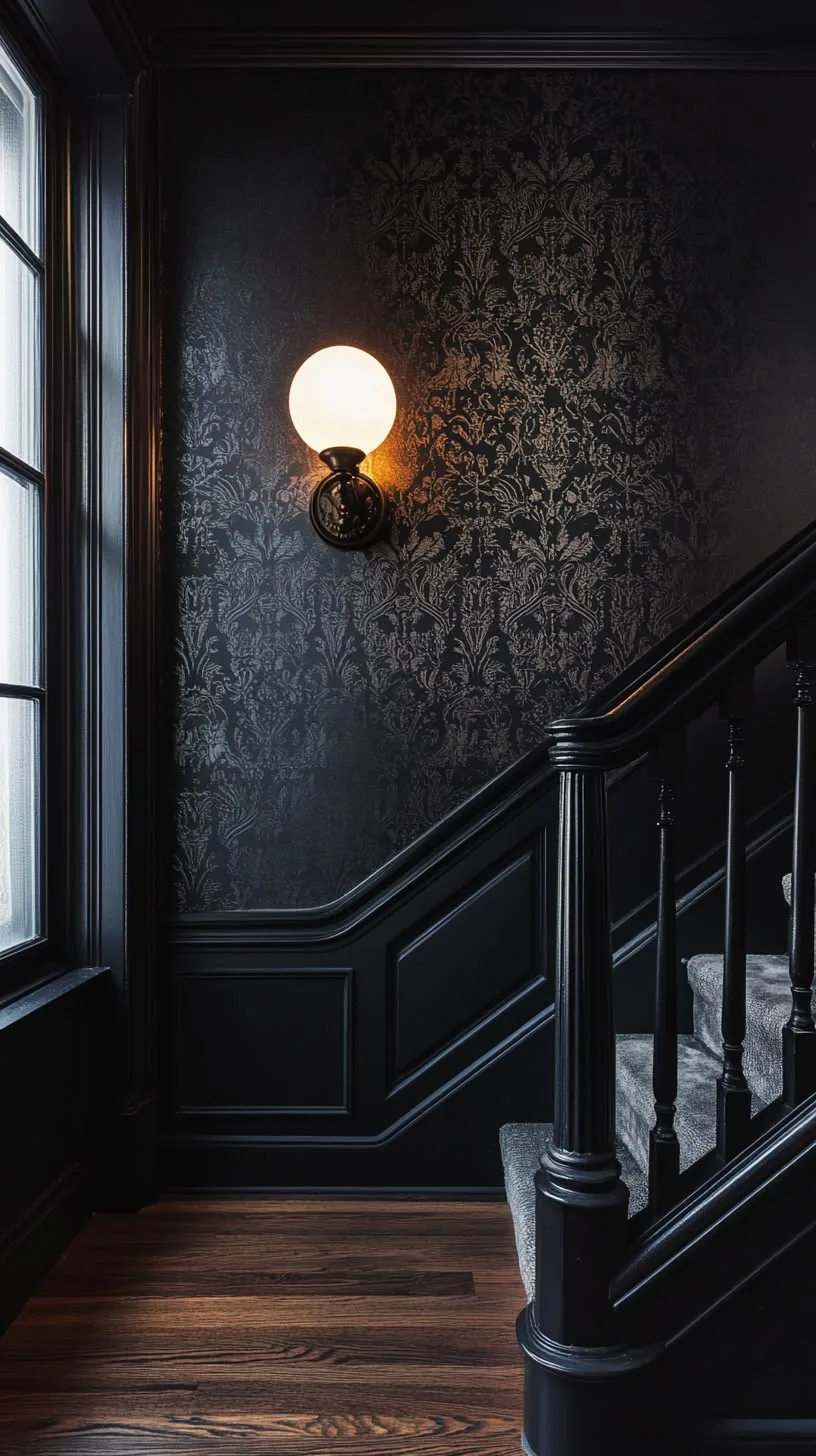
The staircase wall is the biggest uninterrupted surface most houses have, and the usual treatment — builder’s white, a diagonal line of family photographs — wastes it. The photograph at the top of this post is what happens when you stop wasting it: a tone-on-tone damask, black on near-black, that reads as texture from the bottom of the stairs and reveals its pattern as you climb past it.
Tone-on-tone is the whole trick. A damask in two loud colours turns a stairwell Victorian-theatrical; a damask where the pattern is only a sheen difference — matte black figure on a soft-sheen black ground — turns it quietly gothic instead. The pattern arrives and disappears with the light, which on a staircase means it arrives and disappears as you move. No framed print does that. Search black damask wallpaper →
The honest caveats: hanging paper in a stairwell is the hardest papering job in the house — long drops, awkward ladder angles — so if you’ve never hung paper, this is the one room where paying someone is not a defeat. And if paper isn’t on the table at all, the same effect at lower stakes is dark paint below a rail and dark paper above it, which halves the drop lengths and the risk.
Paint the woodwork like you mean it
Every staircase in these photographs has one thing in common: the woodwork is dark, and it’s all dark. Wainscoting, skirting, banister, spindles, the lot — one deep colour, matte or eggshell finish, no contrast trim. The moment you paint the spindles white “to lift it,” the spell breaks; the staircase stops being a dark object and becomes a light one with dark accents, which is an entirely different and considerably more ordinary room.
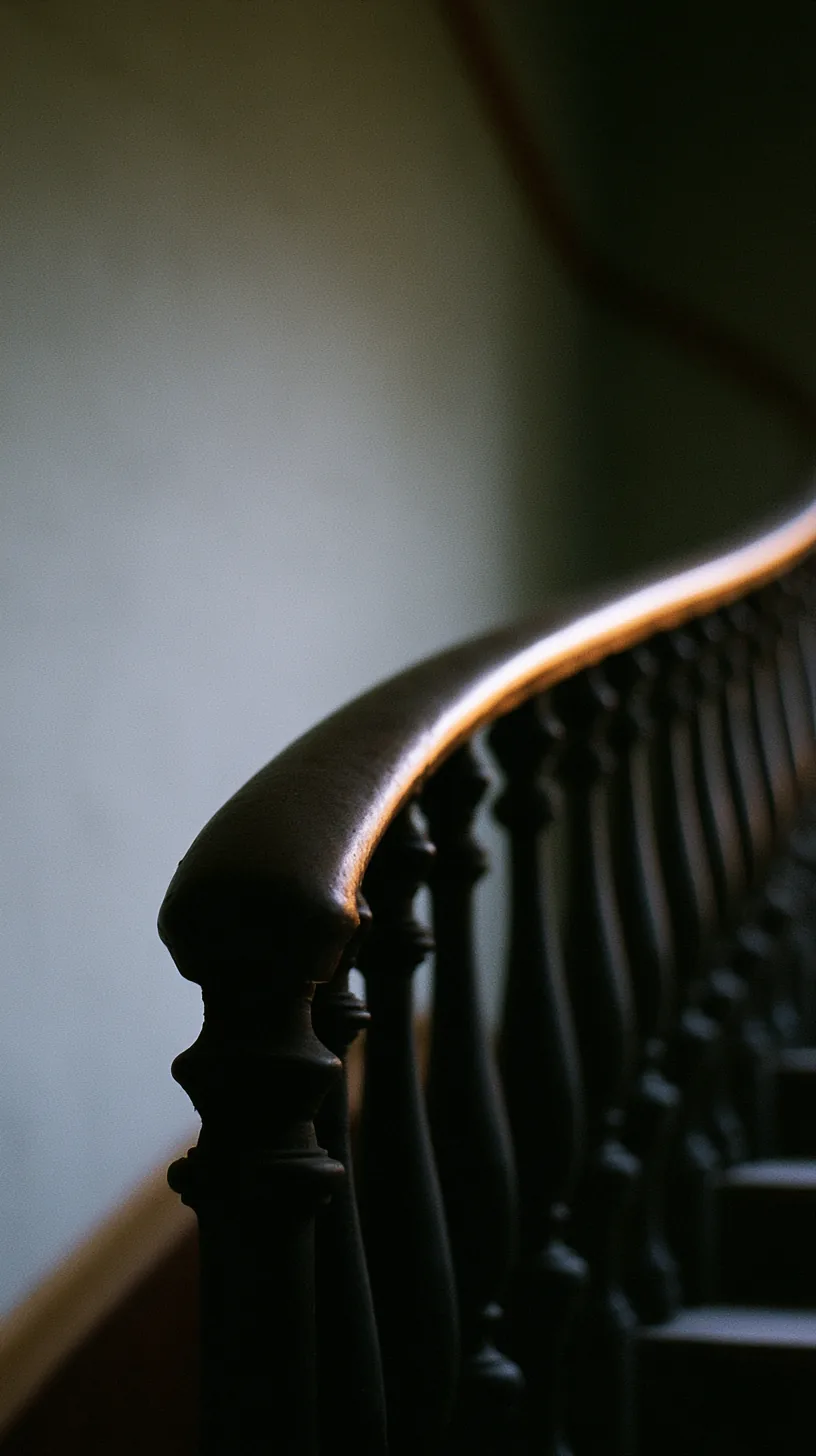
The handrail is the one surface in the house that gets touched every single day. It’s allowed to show it.
A note on the handrail itself, because it’s the detail people get wrong by overthinking: the rail is the most-touched surface in the house, and it should be finished like it — either waxed timber that will burnish where hands land, or paint that’s allowed to wear at the curve. What you’re seeing in the photograph above is decades of palms. You can’t buy that, but you can buy the paint that permits it — the same conviction-dark eggshell I argued for on walls, applied to every stick of the balustrade.
One warm light, placed low enough to matter
Stairwell lighting usually means one ceiling pendant hung so high it lights nothing but itself. The staircase in the hero image does the opposite: a single globe sconce mounted at shoulder height, where its light actually lands on the wall, the rail, and the treads — the three things you look at on a staircase.
A frosted globe on a black or aged-brass fitting is the shape I keep coming back to, because a globe throws light in every direction without glare, and against a dark patterned wall it reads as a full moon in a night sky, which is precisely the register this room wants. One is enough for a straight flight; a long stairwell earns a pair, staggered, never level with each other. Search black globe wall sconces →
What I’d look past: anything described as a “vanity light bar,” however handsome the globes — a row of them is bathroom grammar and the stairwell will read it that way. And put the bulb on a warm dim setting; a cool bright globe in a dark stairwell is a security light.
The runner is the upholstery of the house
Bare painted stairs photograph beautifully and live noisily. A runner is what makes a staircase feel finished — and, not incidentally, what makes it quiet, which matters more than expected in a dark house where the whole mood is hush.
Grey wool, flatweave or low pile, fitted with a margin of dark painted tread showing on either side — that margin is what separates a runner from wall-to-wall carpet, and it’s where the room keeps its edge. The greys in these photographs all sit in the same family: mid-tone, slightly mottled, darker than oatmeal and lighter than the woodwork, so the stairs read as steps rather than a slope of shadow. Search grey wool stair runners →
The honest caveat: fitting a runner on a straight flight is a patient afternoon with a staple gun and a tutorial; fitting one around a winder is a professional’s job, and the quote will sting less than redoing it will.
The floor at the bottom is part of the staircase
The hall floor where the stairs land is the staircase’s fifth wall, and pattern down there repays you every time the light moves.
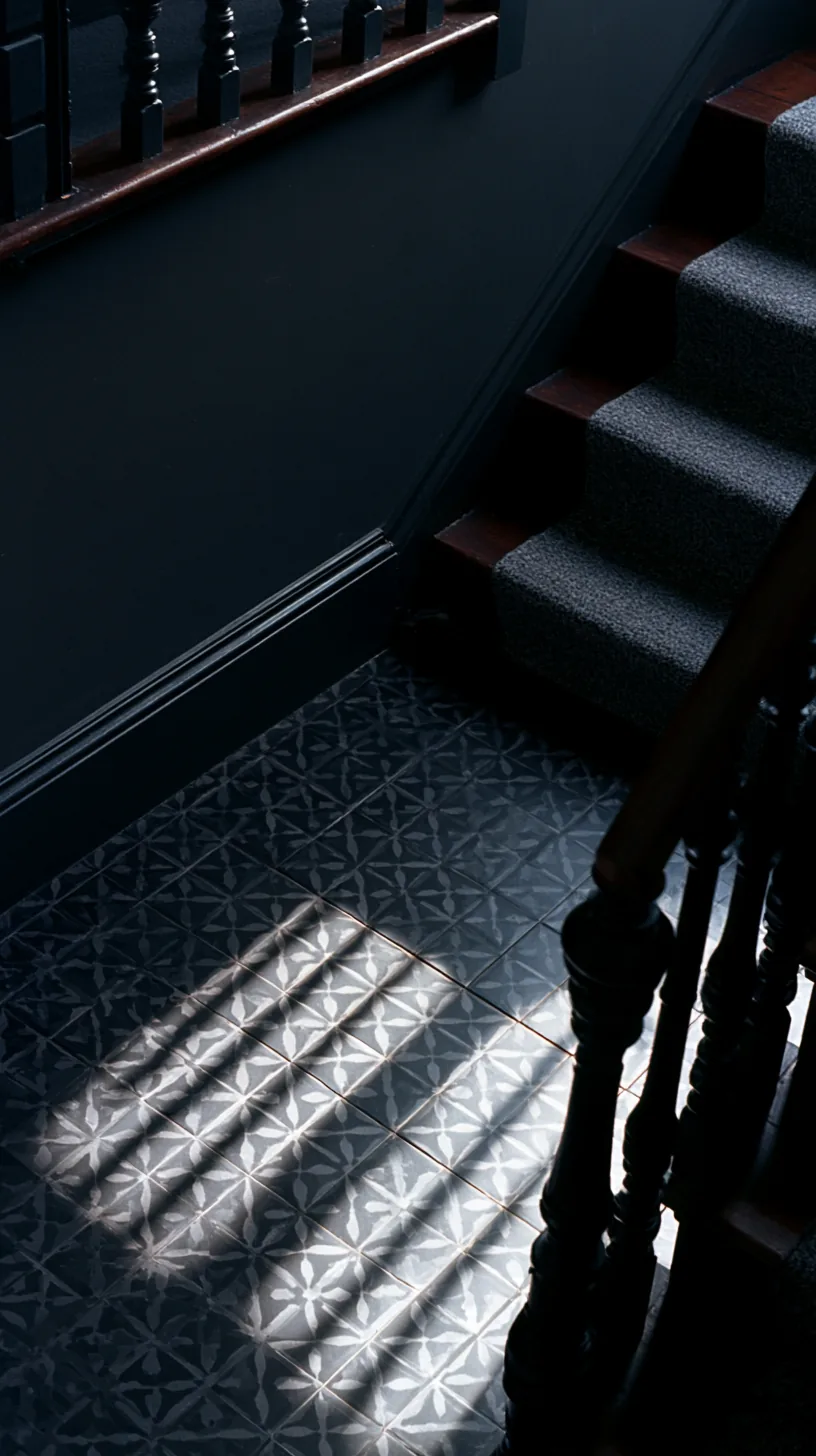
Encaustic tile at the stair foot — the pattern does nothing all day, and then the light crosses it.
Proper encaustic tile is original-feature territory — if your hallway has it under carpet, you’ve won and should go lift a corner right now. For the rest of us, encaustic-look porcelain in a dark two-tone pattern gives the same effect at the foot of the stairs, and a hallway is a small enough floor that the job stays honest. In the deep register this house wants: charcoal-and-grey patterns, never the cheerful blue-and-cream versions, which belong to a sunnier tradition. Search encaustic-look tile →
The landing is a room. Treat it like one.
If your staircase has a landing with a window, you own an unfurnished room and have been walking through it for years.
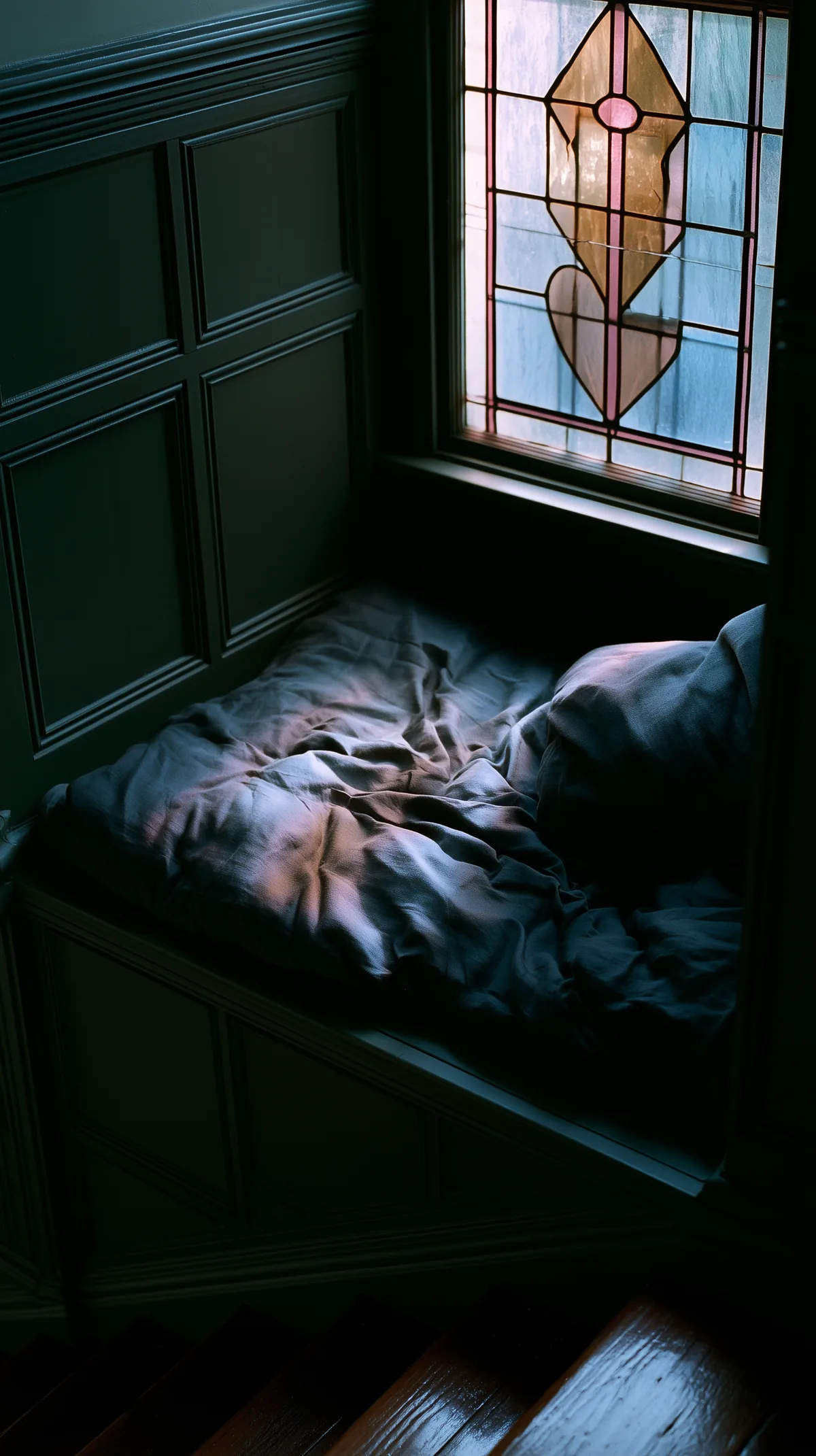
The best seat in the house is on the way to somewhere else.
A window seat on a landing is the deepest version — panelled below, cushioned in washed linen, the sort of place a person reads forty pages without meaning to. But even without carpentry, a landing takes a chair, a cushion on the sill, a stack of books that lives there. The linen should be the rumpled, lived-in kind rather than the fitted, piped kind — the same rule as the bedroom, for the same reason: a dark house should always look slightly, recently used. Search washed linen window seat cushions →
And if the landing window itself is plain glass onto a plain view, a leaded or stained glass film panel in muted tones — rose, amber, the colours in the photograph — turns the light itself into decor. The gothic staircase tradition understood this: when the view isn’t worth framing, colour the light instead.
Where I’d start
If the whole list is too much for one season, the order that earns its keep: paint the woodwork dark first — it’s a weekend and it changes everything above and below it. The sconce second, because light is what makes dark paint legible. The runner third. The paper whenever courage and budget align.
A staircase done this way stops being the gap between rooms. It becomes the thing guests mention in the car on the way home — the black damask, the globe of light, the quiet climb. The rest of the house can take its time; the staircase is where a dark home makes its case in thirty seconds, twice a day, every day.
From the shop
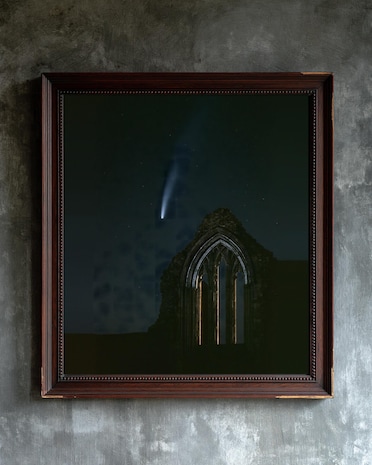
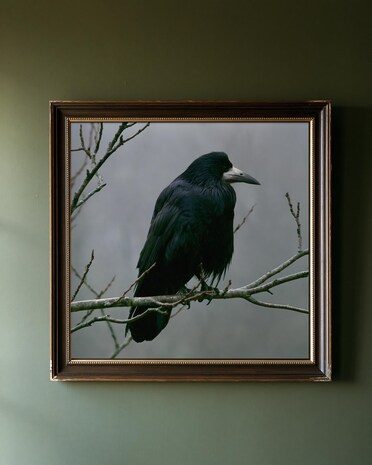
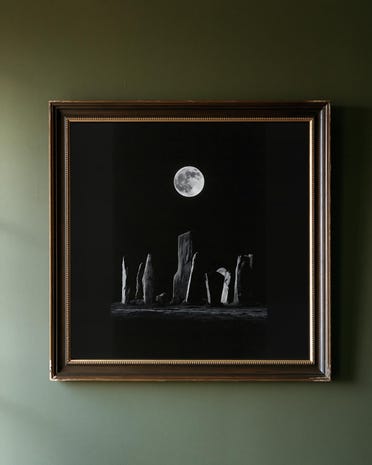
Prints from our own Duskwood Fell shop that suit this room. Instant digital downloads, printed at home or at any print shop.
This post contains affiliate links. If you buy through these links, I earn a small commission at no extra cost to you. I only link what I’d actually consider.