This post contains affiliate links. As an Amazon Associate, I earn from qualifying purchases — at no extra cost to you.
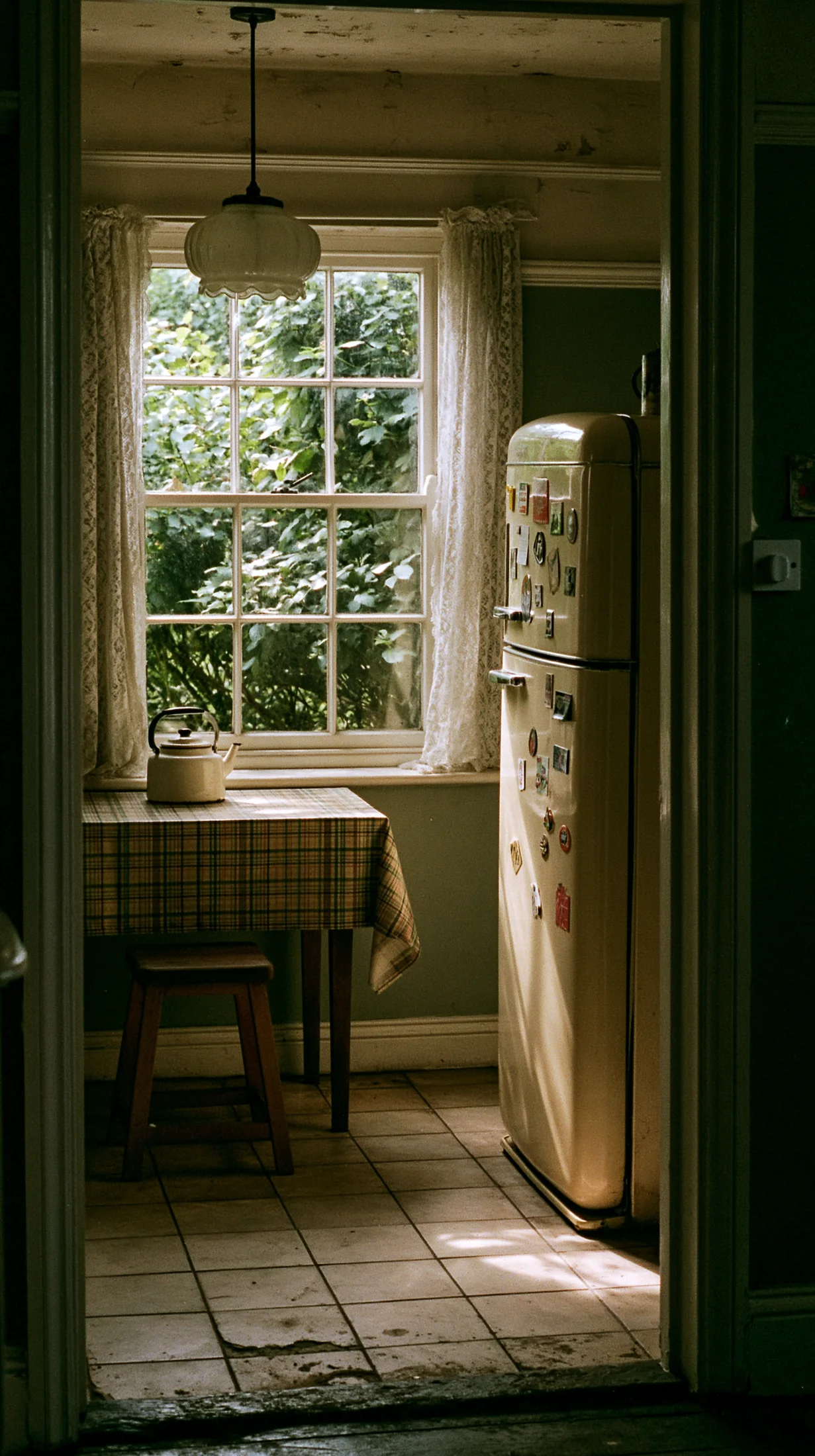
Every dark cottagecore kitchen photograph that stops me has the same secret, and it isn’t the paint colour. It’s that nothing in the room arrived at the same time. The fridge is older than the tablecloth, the tablecloth is older than the kettle, and the lace at the window looks like it came with the house. You cannot renovate your way to that. You can only accumulate it — which is better news than it sounds, because accumulation is cheaper than renovation and considerably more forgiving of mistakes.
So this is not a post about ripping out cabinets. It’s about the five things that actually do the work in a dark cottagecore kitchen, roughly in the order I’d acquire them, with honest notes on what to look past.
Start at the table
If the room has a heart, it’s a worn table — and I mean genuinely worn, not distressed at a factory. Paint rubbed through at the edges where hands have been, rings where hot things sat, a surface that’s been scrubbed more times than it’s been photographed.
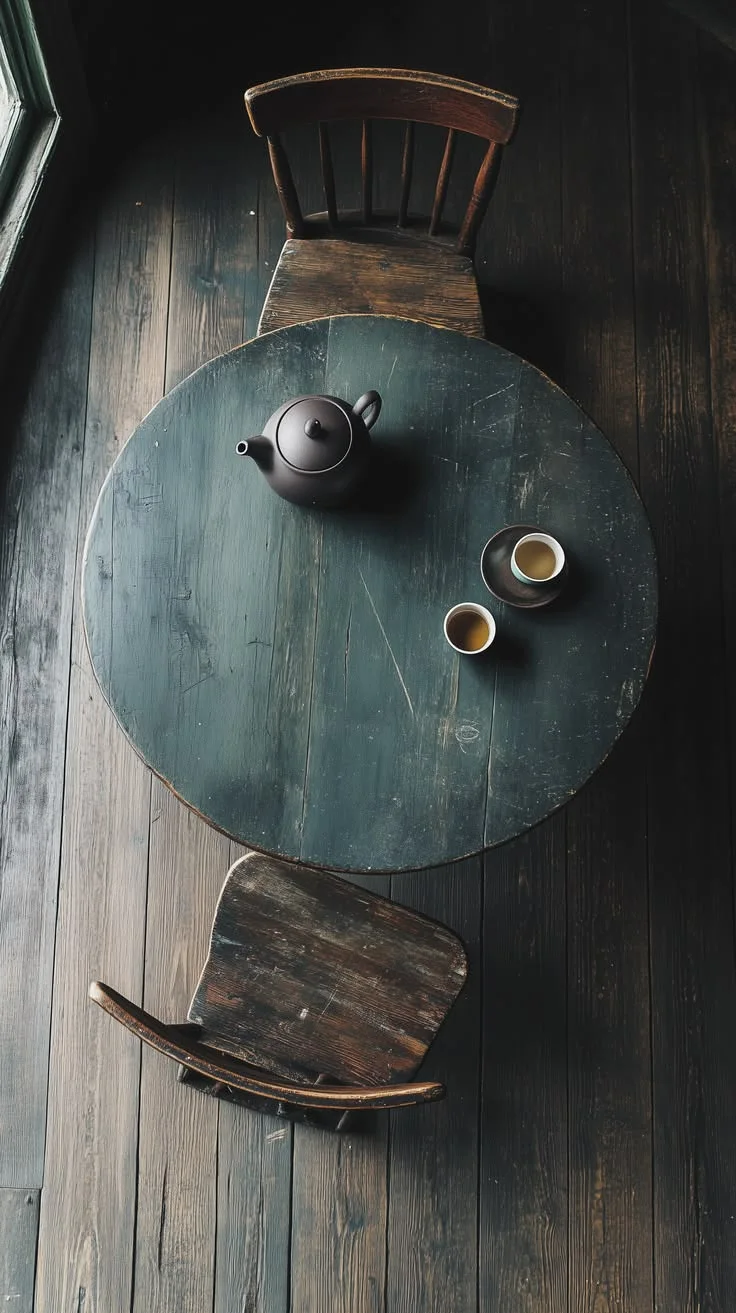
This is the piece I’d never buy new, and honestly, never buy from a listing that uses the word “farmhouse.” Secondhand is the whole point: estate sales, marketplace listings photographed badly in someone’s garage, the table nobody else wanted because the paint was chipped. The chipped paint is the value. When you’re searching, skip “vintage table” — everyone searches that, and the prices show it. Search “old pine table,” “painted kitchen table,” or just “sturdy table” and sort by newest; the best pieces are listed by people describing function, not style. A hundred-year-old table with honest wear costs less than a new one pretending, and it anchors everything else in the room — the way dark walls anchor a bedroom.
Paint is the only renovation allowed
I said this wasn’t a renovation post, and it isn’t — but there is one weekend’s work that earns its place, and it’s paint. Not new cabinets: your existing cabinets, painted dark. Forest green, charcoal, a blue so deep it reads black in evening light. The cabinets in every kitchen photograph on this site are ordinary cabinet boxes wearing extraordinary colour, and the transformation costs a tin of paint and two days of patience.
The honest caveats, because there are two. First, resist the compromise shade. The route to this room is not a fashionable grey-beige that won’t frighten anyone; it’s a colour with actual conviction, applied to every cabinet, not an “accent island.” Half-dark reads as hesitation. Second, the finish matters more than the colour card suggests: you want matte or eggshell, never gloss. Gloss is what builders use to say “new,” and new is the one thing this kitchen must never say. If the first coat looks slightly uneven in raking light — brush marks, a little texture — you’re doing it right. That’s the hand-painted quality that factory finishes spend a great deal of money failing to imitate.
The cast iron does the heavy lifting
One seasoned cast iron skillet, out where you can see it, does more for a dark kitchen than a full set of anything. The matte black surface, the heft, the fact that it visibly improves with use — it’s the aesthetic of the whole room in one object that also happens to cook your eggs.
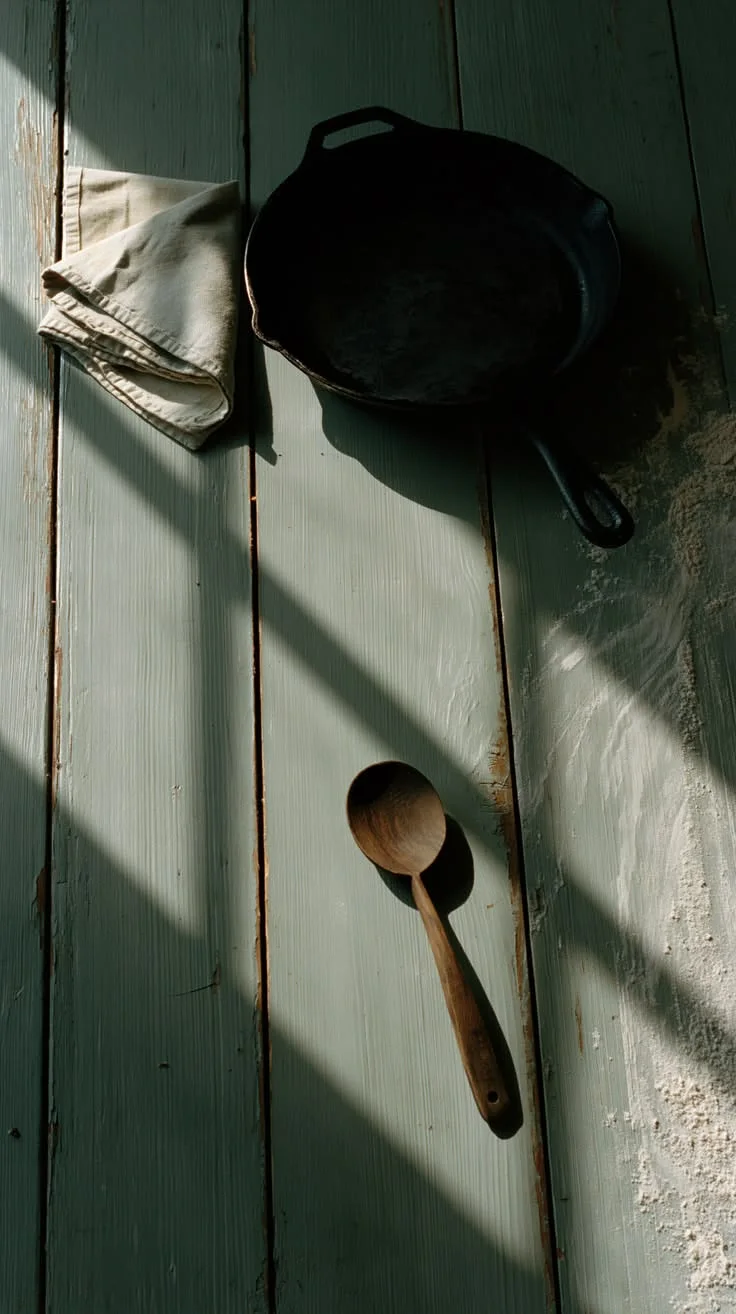
I’ve written a longer case for cast iron, so here’s the short version: buy plain, buy heavy, and don’t pay extra for “vintage-style” — cast iron isn’t a style, it’s a material that becomes vintage on its own schedule. A basic pre-seasoned skillet around ten to twelve inches is the honest starting point; the patina in the photograph above is nothing more exotic than years of cooking. Shop cast iron skillets here →
What I’d look past: anything described as “enameled cast iron” in a bright colour if this look is your goal. Beautiful objects, wrong register — the gloss fights the room.
Metal that’s allowed to age
The difference between a dark kitchen that feels inherited and one that feels decorated usually comes down to metal. New kitchens have metal that stays new — stainless, chrome, lacquered brass that never changes. This kitchen wants metal with a memory.
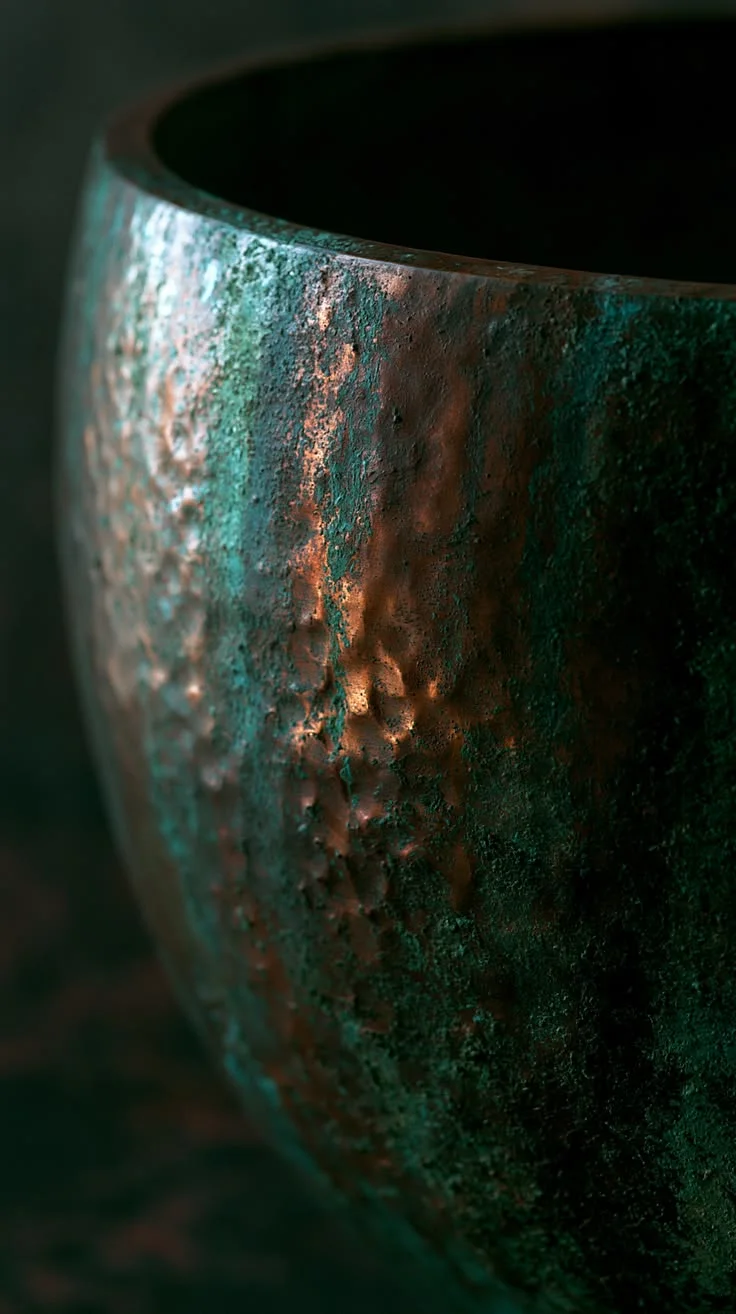
Copper is the easiest way in, because copper cannot help itself — it darkens, spots, and greens no matter how it arrives. A hammered copper canister or a couple of copper measuring cups will do their aging on your shelf, and in two years they’ll look like they’ve been in the family. Shop hammered copper here →
The honest caveat: much of what’s sold as “antique copper finish” is a lacquered coating on steel, and it will never develop patina — it will only chip. Read the listing for the word “solid.” If the description promises the finish won’t tarnish, that’s the manufacturer telling you it can’t age, which is precisely the wrong promise for this room.
The kettle and the lace
Here is where the look gets accused of being twee, and where the accusation misses. An enamel kettle on the hob and a lace café curtain at the window aren’t decoration — they’re the two objects that make a dark kitchen feel inhabited rather than brooding. Dark paint without them reads as a moody photograph. With them it reads as someone’s Tuesday morning.
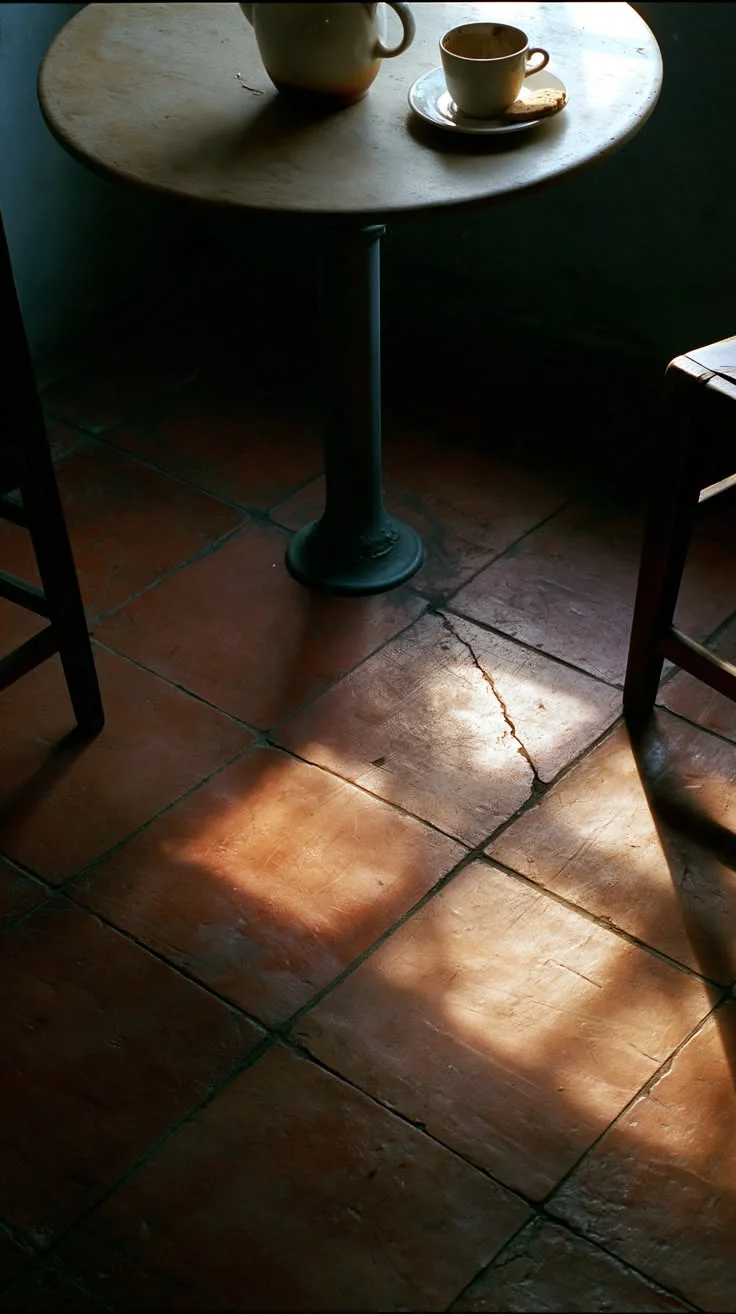
For the kettle, cream or white enamel with a bit of visible history is the register — and a new one dents into character quickly enough. Shop enamel kettles here → For the curtain, cotton lace only; polyester lace photographs fine and looks wrong in person, in exactly the way cheap dark linen does. Shop cotton lace café curtains here →
Open shelves, odd dishes
The last piece is what lives on the shelves, and the rule is the same one that governs the whole room: nothing in sets. A shelf of matched dishware reads as a registry; a shelf of odd stoneware — different heights, different makers, glazes that almost agree — reads as years of choosing one good thing at a time. I’ve written about how to read a stoneware listing honestly, and everything there applies doubly in a kitchen, where the dishes are in view all day.
The kitchen, not the checklist
None of this happens in a weekend, and that’s the point — a dark cottagecore kitchen is the visible record of patience. It’s also, quietly, the cheapest room in the house to get right: one honest table, one skillet, one kettle, and paint cost less than a single run of new cabinetry, and they’ll outlast it too. Start with whichever piece you’ll actually use tomorrow morning: the skillet if you cook, the kettle if you don’t yet. Let the copper age on its own schedule. And when the table with the chipped paint turns up in a bad marketplace photo, you’ll recognise it.
This post contains affiliate links. If you purchase something through one of these links, Duskwood Fell may earn a small commission at no extra cost to you. Read our full Affiliate Disclosure for details.
From the shop
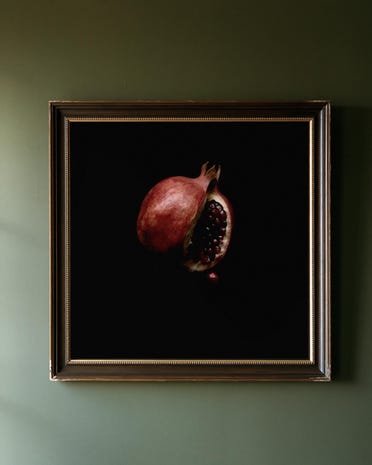
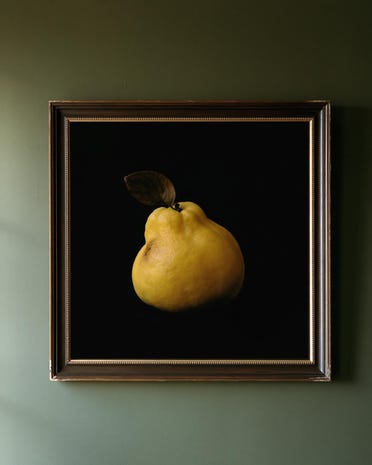
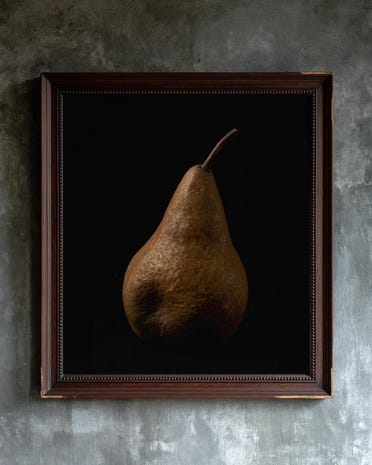
Prints from our own Duskwood Fell shop that suit this room. Instant digital downloads, printed at home or at any print shop.