This post contains affiliate links. As an Amazon Associate, I earn from qualifying purchases — at no extra cost to you.
The gardens that stop me have almost nothing to do with flowers.
I keep a folder of them — gates half off their hinges, a bench gone green under a yew, a path that gave up being a straight line about forty years ago. Not one of those pictures is really about a plant. Ask someone to describe a cottage garden and you’ll get a list: hollyhocks, foxgloves, roses over the door. But go and look at the gardens that actually feel like something, and what you find is stone, iron, wood, and time. The planting is the last layer. The bones came first, and the bones are what you’re responding to.
That changes what you can do about it. You cannot buy a plant that has been there for thirty years. You can buy a gate hinge, a bench, a clay pot — and the trick of this whole style is choosing the ones that start aging the day they arrive over the ones engineered never to change at all.
Five decisions, roughly in order of how much they change the feeling.
The gate is the first sentence
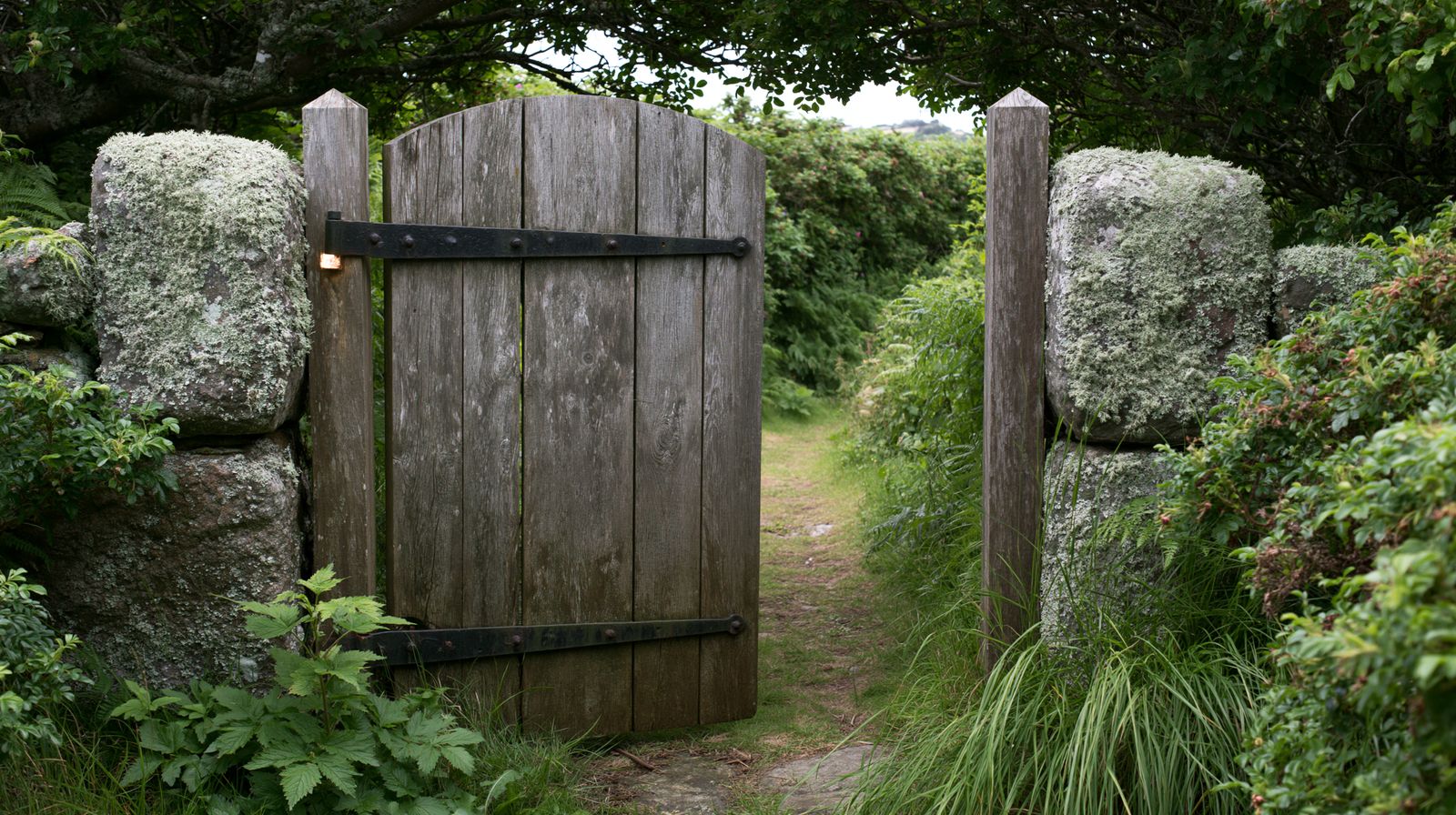
A cottage garden is a walled thing — that’s the idea underneath all of it. It’s a piece of the world someone fenced off and then let get away from them. So the boundary and its opening carry more weight than anything you plant inside them, and a gate announces immediately whether it is old or whether it went up last spring.
The tell is almost always the hardware. A gate hung on two small silver hinges from the hardware aisle looks new no matter how good the timber is. The old ones ran long straps across the boards — partly structure, mostly the look of the thing — and moving in that direction does more for a plain gate than replacing the gate would. Black strap hinges with a spear point are the traditional silhouette, and they turn a flat panel of wood into something with a date on it. Shop these black strap hinges →
Two things worth knowing. These are eight inches, which on a standard three-foot gate is a strong accent rather than the full historical strap running most of the way across — if you want that, buy longer and heavier, and buy heavier regardless if your gate is wider than about four feet, since one reviewer found these light for a six-foot double.
And a principle that covers every piece of metal below: hardware gets chosen for its shape, not its patina. These are steel with a black finish and they will stay black, which is what you want on something that has to keep swinging for twenty years. Save the real weathering for the things with no job to do.
Then leave the gate ajar. A closed gate is a boundary; an open one is an invitation, and it’s the easiest thing in this post to get right.
The path should have changed its mind at least once
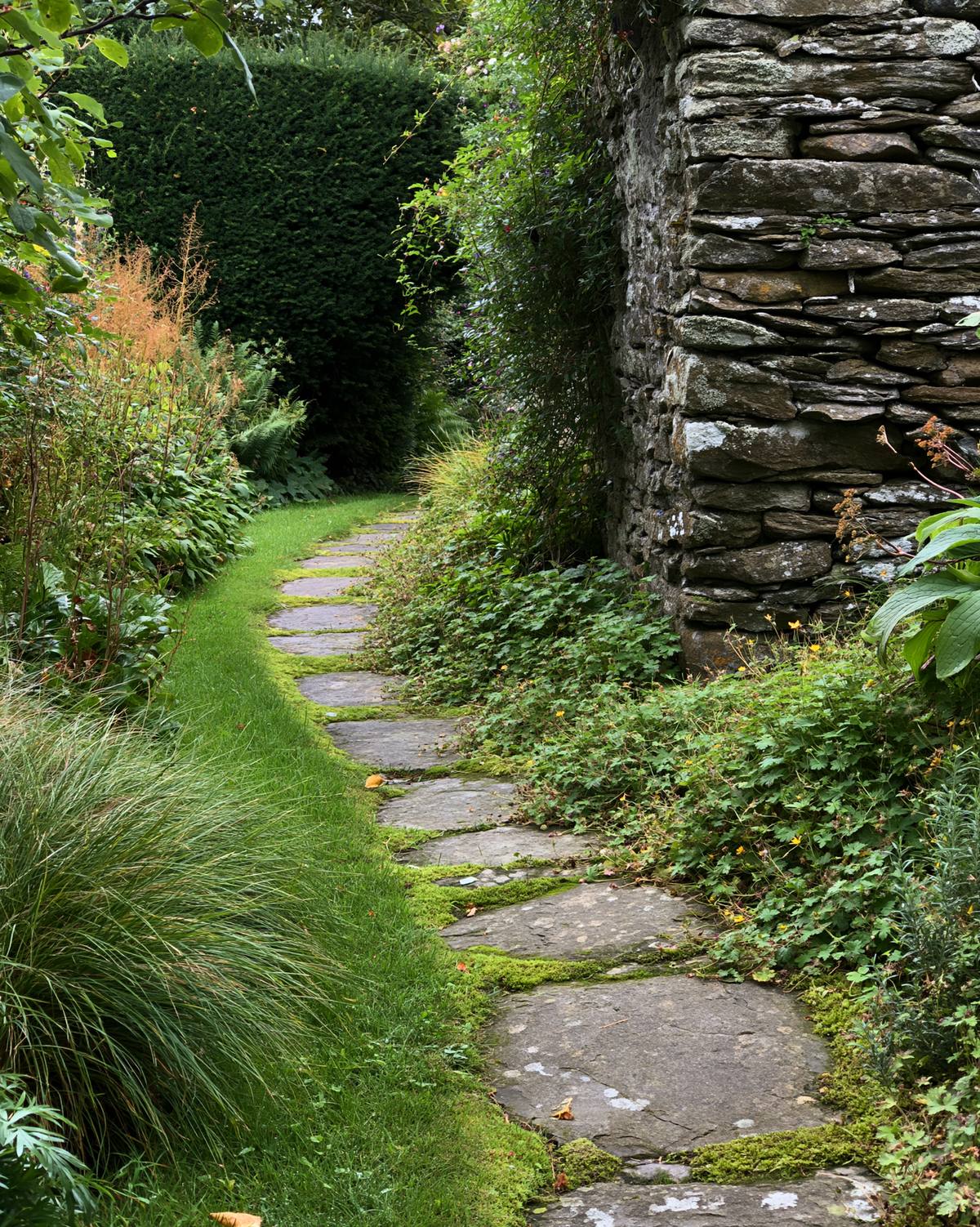
A path that bends around something looks walked into being rather than laid.
This one costs nothing, which is why it’s here rather than in a shopping list.
A path that runs straight from A to B looks like infrastructure. A path that bends around something — a shrub that got too big, a stone nobody wanted to move, a corner where the ground dips — looks like it was walked into being rather than laid. That’s the whole difference, and it’s free. If you’re putting in stepping stones, curve them. If your path is already straight, plant something at the edge that spills over and softens the line; low mounding plants flopping across the border will do in one season what a redesign would.
Let the edges blur. A path with a crisp mown margin on both sides looks maintained. A path the garden is quietly reclaiming looks old, and looking old is the whole project.
One seat, and put it somewhere slightly inconvenient
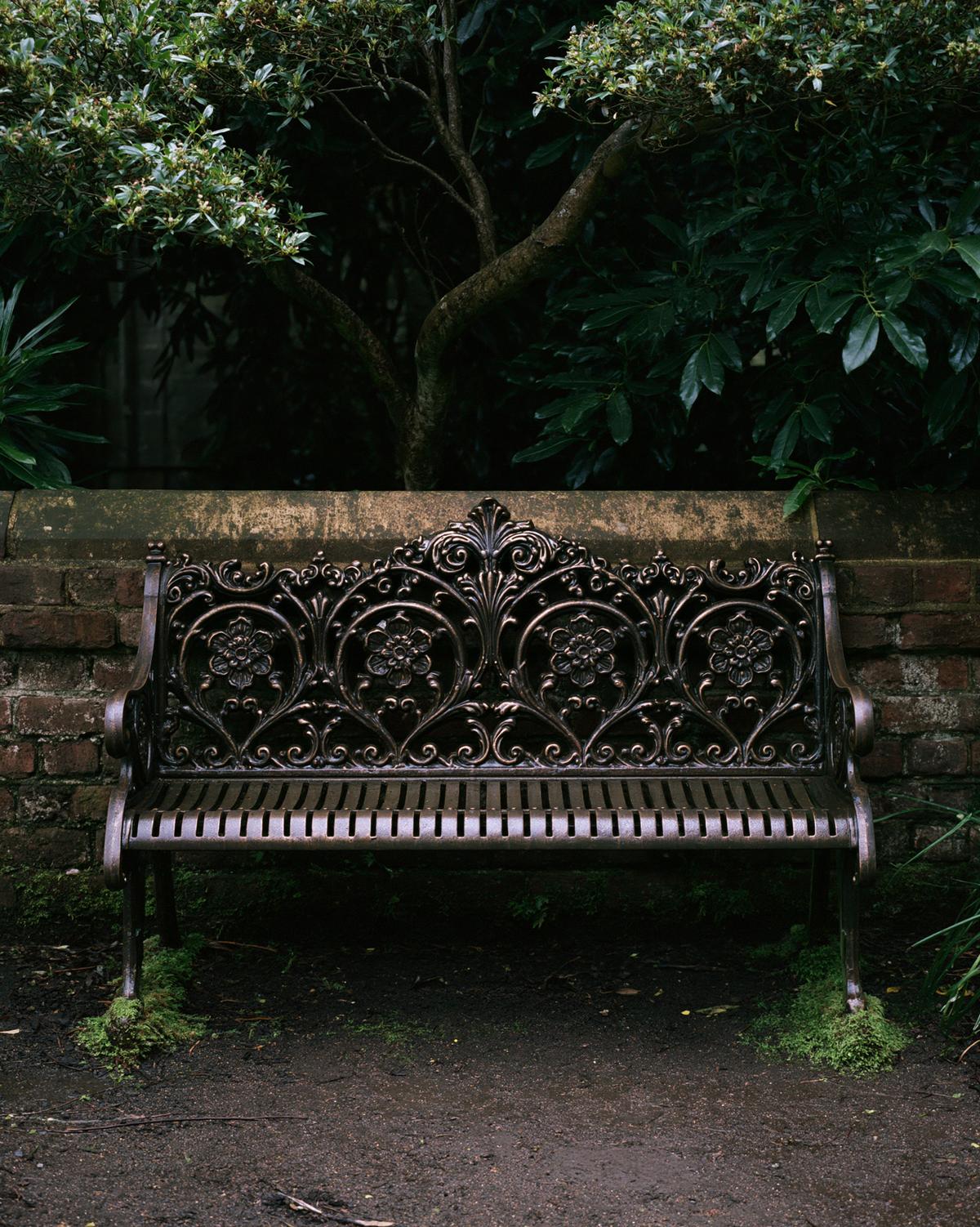
One bench alone under a tree looks like somewhere a person actually sits.
Every garden like this has a bench, and it’s almost never in the sensible place. It’s tucked against a wall, or facing away from the house, or under a tree where the light comes through badly. That isn’t neglect — it’s the difference between a seat that was placed and a seat that was arranged. Garden furniture in a tidy matched set on a patio looks like an outdoor living room. One bench alone under a tree looks like somewhere a person actually sits.
Material is where this gets complicated, and it’s worth being straight about it rather than selling you the easy answer.
The ideal is solid teak bought unfinished. Left alone and unoiled, teak turns from honey to a soft silver-grey over two or three seasons and then holds for decades without rotting — genuine weathering, on your schedule, in your weather. The problem is buying one. Search “teak bench” and most of what comes back falls into two piles: teak that has been factory-finished grey, with the aging sprayed on and sealed under a coating so it can never actually weather, and “teak” that turns out on inspection to be recycled polystyrene moulded to imitate wood grain. Both are the thing this post argues against, sold under the word you were searching for.
Cast iron is the honest way through, and it’s a fraction of the price. It’s genuinely heavy, genuinely metal, and the Victorian scrollwork park-bench shape suits an old garden better than anything designed recently — it looks like something that was already in the garden when you got there. Shop this cast iron garden bench →
Worth knowing: it ships flat and takes about an hour to bolt together, and the anti-rust coating means it will hold its bronze finish rather than developing real rust. That’s a trade I’d make on something you sit on and something that has to hold 500 pounds — but it is a trade, and it’s the same one the hinges make.
If you do find unfinished hardwood or real stone within reach, take it. The rule holds either way: buy something allowed to weather over something built to stay new.
Give the climbers something to take over
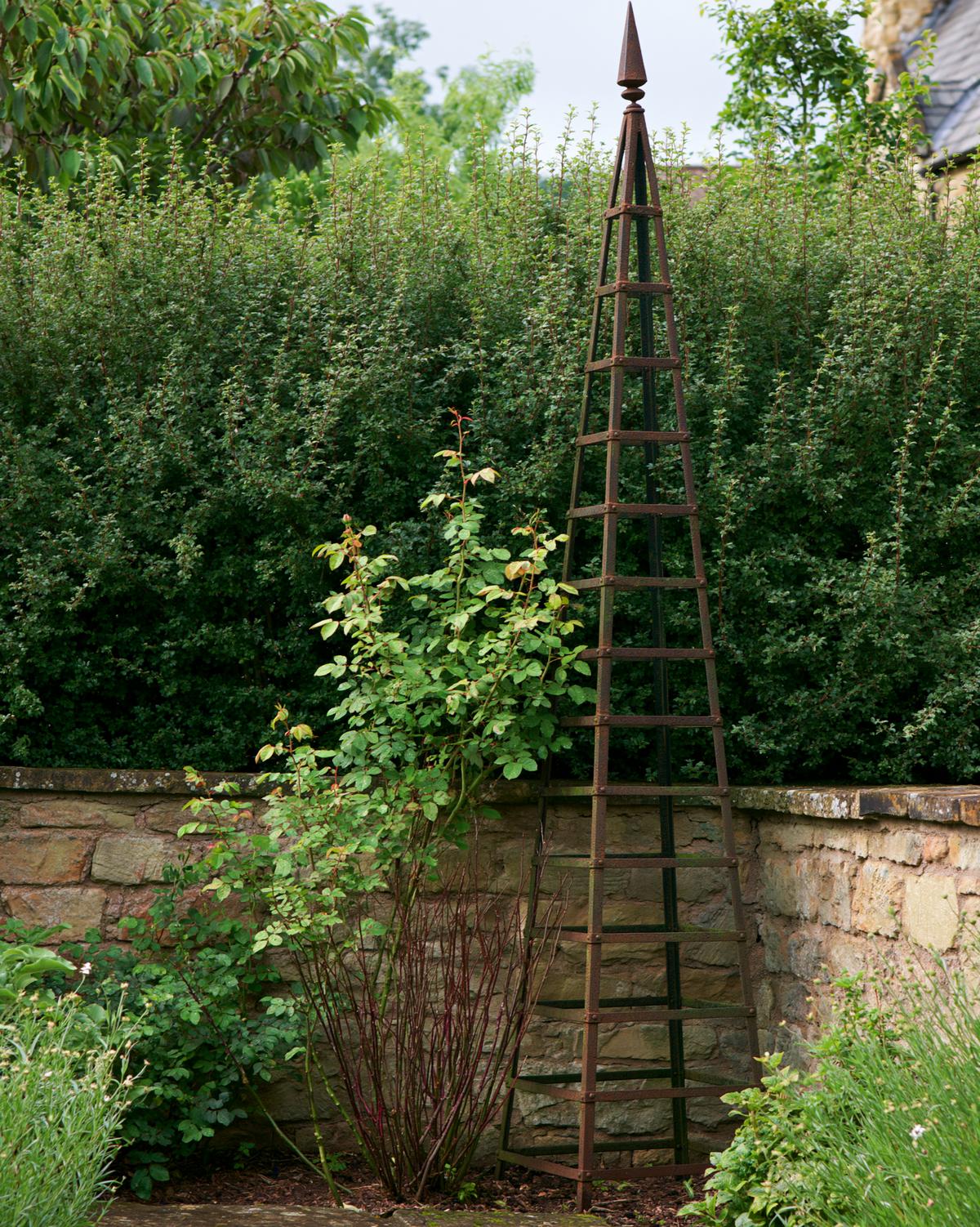
It looks deliberate while it’s bare and like a ruin being swallowed once something’s grown over it.
The pictures people save from gardens like this are usually of a plant winning — ivy over a wall, a rose that ate a doorway, ferns colonising the foot of a house. Vertical growth is what makes a garden feel deep rather than flat.
Be realistic about speed, though, because this is where garden writing usually lies to you. A vigorous climber in a spot it likes will put on several feet in a season — honeysuckle and the rambling roses will. Clematis famously sleeps its first year, creeps its second and only leaps in its third. Climbing hydrangea, the best of them for genuine shade, is slower still and worth the wait anyway. Plant for three years, not for this July.
Whatever you plant needs something to climb, and what you give it shows. A plastic mesh panel looks like exactly what it is for the whole first year, until the plant hides it. A metal obelisk — the tapered spire English gardens have used for centuries — looks deliberate while it’s bare in winter and looks like a ruin being swallowed once something has grown over it. Both states are useful, which is more than most garden structures manage. Shop this metal garden obelisk →
It arrives flat-packed and needs assembling, it stands about six and a half feet, and its bronze-brown finish suggests weathered iron rather than true black — coated, like the hinges, and for the same sensible reason.
Real clay, not clay-coloured plastic
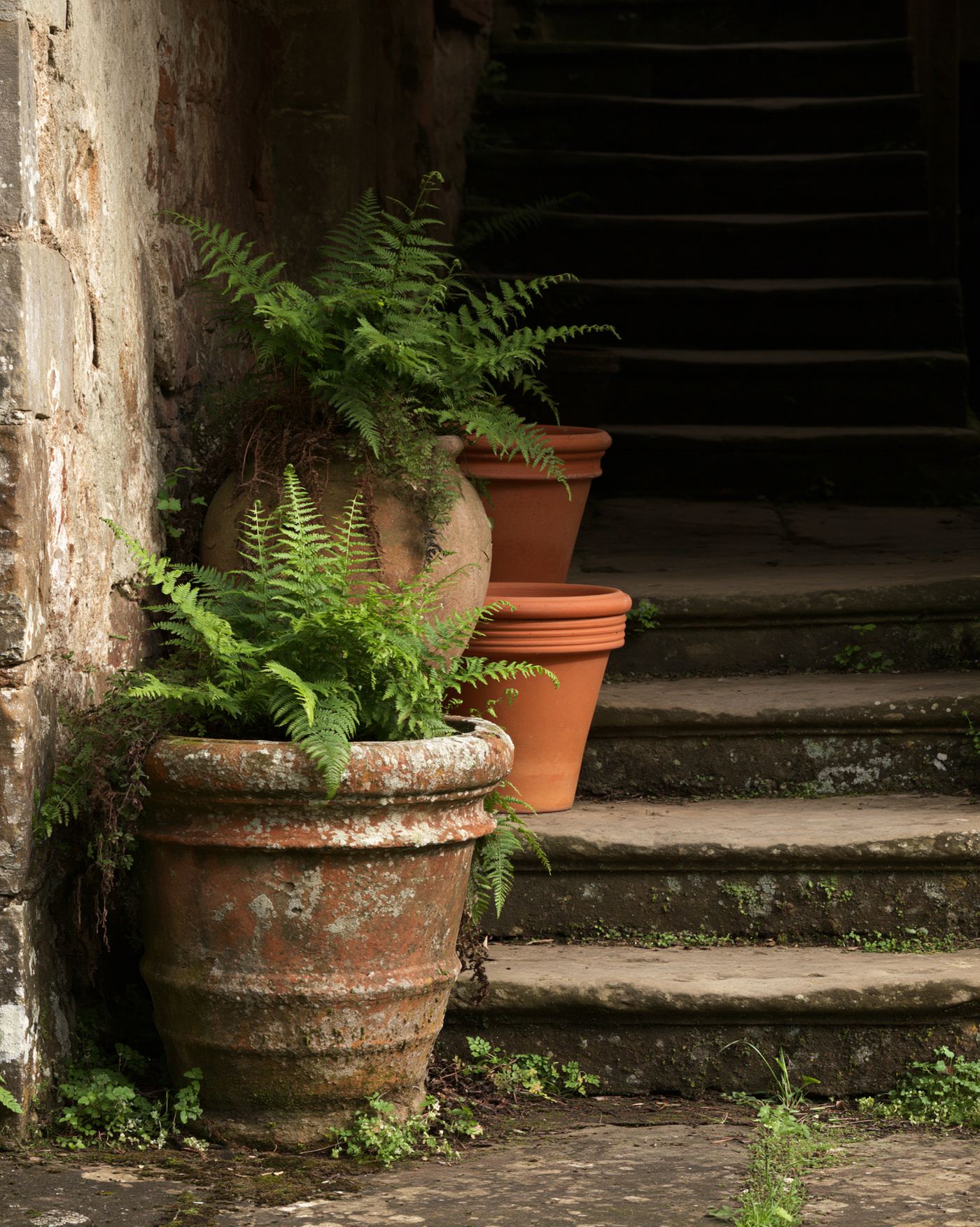
The same pot, fifteen years apart — which is the whole argument for buying real clay.
Here’s where people most often buy the opposite of what they came for.
Search “aged terracotta planter” and much of what returns is fiberstone or resin with the aging painted on — a whitish distressed wash applied at the factory, frozen at whatever stage the designer liked. And it doesn’t hold there either: sun fades and chalks those finishes over a few years, so the pot doesn’t age, it degrades. You end up with something that looks worse rather than older, which is the opposite of the deal you thought you were making.
Real unglazed terracotta does the work. It’s porous, so it drinks and breathes: first a chalky salt bloom within weeks, then moss at the damp base within months, then lichen at the rim over years. That weathering is specific to your garden — the pot ends up recording your particular wall, your particular shade. Shop these unglazed terracotta pots →
Two warnings, and the second one matters more than anything else in this post.
They arrive an assertive bright orange and look wrong for a season. That’s the bargain — you’re buying the start of a process, not the finished look.
And that same porosity that makes terracotta weather beautifully is what destroys it in a hard freeze. A pot full of damp soil in a Chicago January absorbs water, the water freezes and expands, and the clay splits. These are not sold as frost-proof and few affordable ones are. Empty them, turn them upside down, and move them under cover before the first hard freeze — or accept you’re replacing them. Anyone gardening somewhere that doesn’t freeze can ignore this entirely.
One light, not a runway
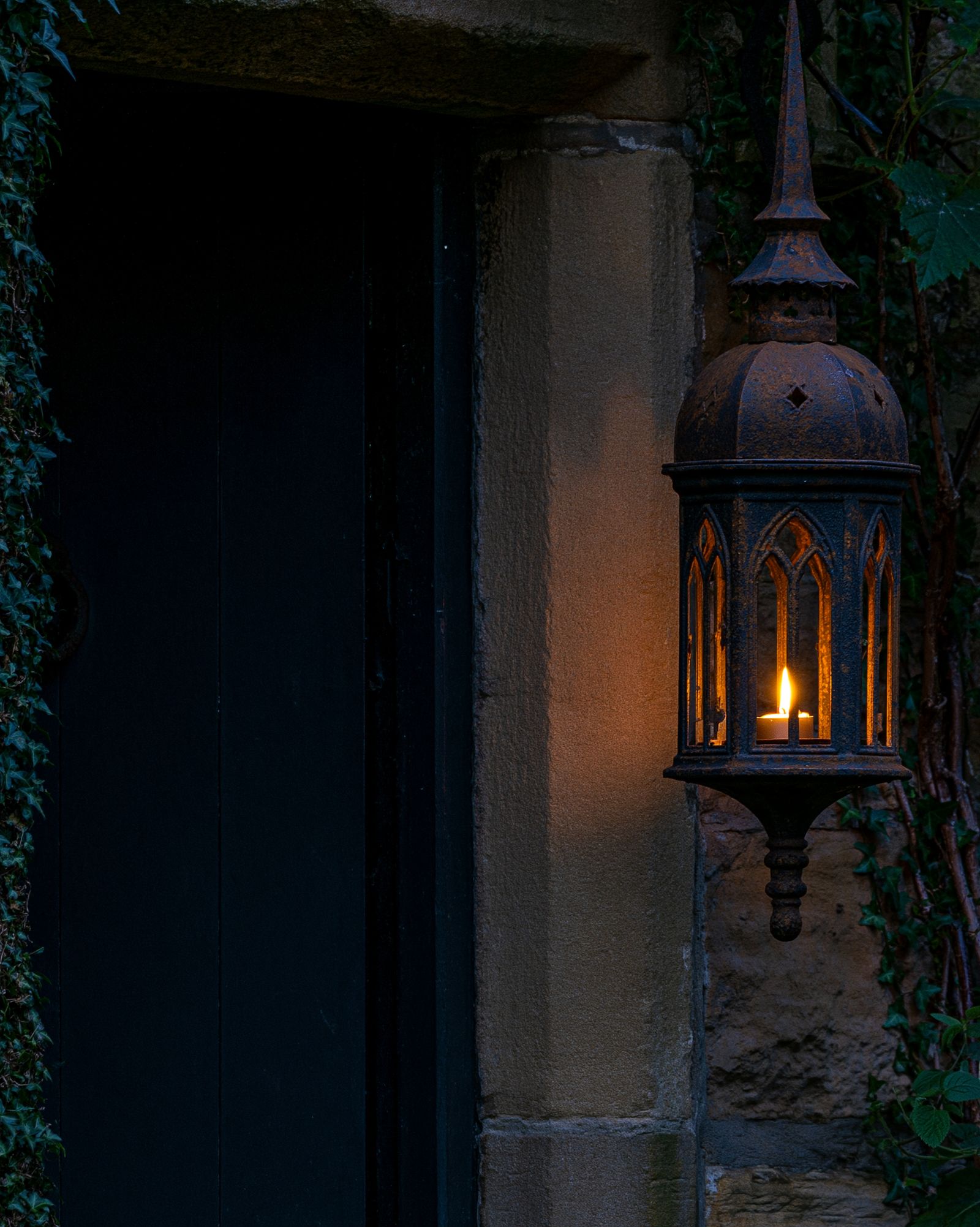
One warm source doing one job, with real dark around it.
Nothing kills a garden after dark faster than a line of solar stakes marching down the path at even intervals. It reads as a driveway. The gardens that look extraordinary at night are lit the way the rooms in this house are lit — one warm source doing one job, with real dark around it.
A single lantern by a door, on a wall, or set on the bench does more than a dozen path lights. Cast iron in a gothic silhouette suits this particularly well: it belongs to the same family as the ironwork on the gate, and it holds one small light rather than throwing floodlight. Shop this cast iron church lantern →
Buyers flag two things. It’s small — under nine inches, and several people expected considerably more — and the rust finish is raw, so it will mark hands and pale surfaces. Outdoors on stone or iron that’s a feature; on a painted windowsill it’s a nuisance. Use a flameless tealight if it’s going anywhere near dry planting or a wooden bench, and never leave a live flame out unattended.
And when the garden goes
The hard part of a dark garden is that for four months a year it isn’t there. The bones hold — gate, bench, obelisk standing bare — but the green goes, and the window that looked onto something in July looks onto structure in January.
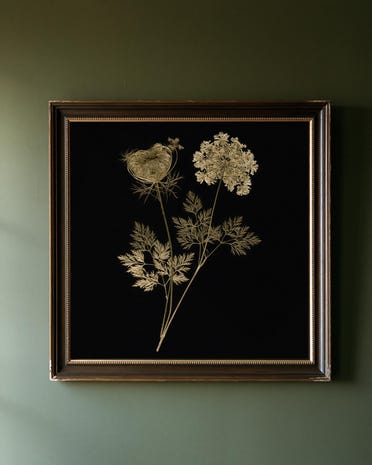
The old answer was to bring specimens indoors: pressed, framed, kept. A fern study does this better than most, partly because ferns are the plant that genuinely earns its place in a dark garden — they want exactly the damp shade that defeats everything else — and partly because they’re properly ancient. This royal fern study from our own shop is one of the oldest fern lineages still living, which is a fitting thing to hang in a room whose window is currently showing you bare soil. It’s an instant download, so it can be framed and up this week.
Where I’d start
Start with the gate hardware. It’s the cheapest thing here by a wide margin, it takes an afternoon, and it changes the first thing anyone sees — a better return than any plant costing the same.
The bench is the anchor and the piece the rest of the garden arranges itself around, so it’s worth getting right rather than fast. The obelisk and the pots can follow whenever, and they’re better bought in ones and twos over a couple of years than all at once — six matching new pots look like a purchase; four pots of visibly different ages look like a garden.
The lantern is last and optional, and only matters if you actually go out there after dark. If you do, it matters more than everything above it.
And if you want one thing to do this week while the ground is too wet to work: the fern print. It costs less than a bag of compost, it’s on the wall by Saturday, and it’s the part of this that doesn’t depend on the weather.
None of this is a planting plan, which is deliberate. Plants are the part that takes care of itself given a few years. The bones are the part you choose — and if you choose ones allowed to weather, the garden does the rest of the work while you’re not watching.
From the shop
Prints from our own Duskwood Fell shop that suit this room. Instant digital downloads, printed at home or at any print shop.


This post contains affiliate links. If you buy through these links, I earn a small commission at no extra cost to you. I only link what I’d actually consider.