This post contains affiliate links. As an Amazon Associate, I earn from qualifying purchases — at no extra cost to you.
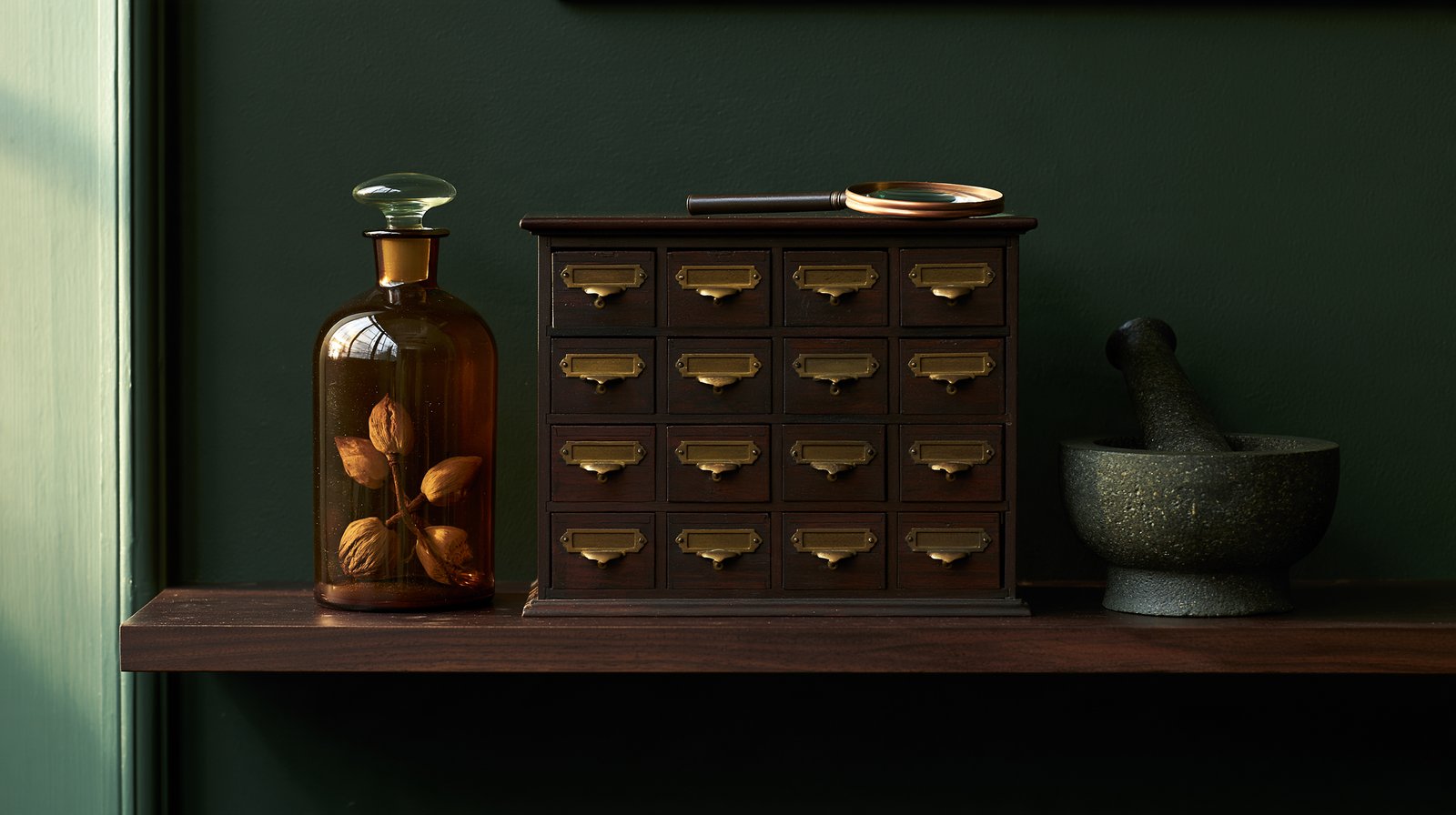
Every old pharmacy had one wall that nobody photographed. Not the counter, not the till: the wall behind it, where the stock actually lived. Rows of amber glass with ground stoppers. A cabinet of tiny drawers, each one holding something that had to be kept dry and dark. A stone mortar worn smooth in the middle. It was never designed to be looked at, which is exactly why it is so good to look at.
That is the shelf this post is about. Not a potion-bottle Halloween display, and not a spa bathroom with three matching jars. A working apothecary shelf, the kind that looks like someone has been adding to it for thirty years.
Start with the shelf, and keep it dark
The shelf decides everything that sits on it. A pale floating shelf turns amber glass into a candle-shop display; a dark one makes the same glass glow. Look for real wood in a deep stain, deep enough (six inches or more) to take a cabinet and a row of bottles side by side.
A pair of solid pine floating shelves in a dark American walnut stain does the job without visible brackets, which keeps the eye on the objects rather than the hardware. Hang the lower one at the height of a kitchen counter and the upper one about fourteen inches above it. An apothecary wall wants to be reached, not admired from across the room.
Anchor it with drawers
Every real apothecary had a drawer cabinet, and one small one does more for this look than any number of bottles. The drawers say there is more here than you can see, which is the whole atmosphere of the thing.
This sixteen-drawer card catalogue chest in a dark ash stain is solid wood with brass label holders on every drawer. Be honest with yourself about its size: the drawers are small, suited to seed packets, pressed petals, spare keys and tea, not jars. Leave the label cards blank or write on them in pencil. A printed label reads as a gift shop; a faint pencil note reads as someone’s system.
Add glass, but only one kind
The fastest way to lose this look is to mix glass: a blue bottle here, a clear jar there, a green one someone gave you. Real pharmacies bought their glass in one colour for a reason. Amber keeps light out, and a row of it on a dark shelf is the single most recognisable apothecary signal there is.
Buy one good bottle rather than a boxed set of twelve. This amber reagent bottle with a ground-glass stopper is the real laboratory shape: wide shoulders, heavy glass, a stopper that seats with a quiet scrape. It comes in several sizes, so you can buy two or three over time in different heights, which is how a real collection grows. Uneven heights look gathered. Matching heights look ordered online.
Put something stone beside the glass
Glass alone goes flat. The shelf needs one heavy, matte, dark object to sit against all that shine, and the mortar and pestle is the one that belongs here historically.
A small granite mortar and pestle on an acacia base is the right weight: dark speckled stone, rough outside, ground smooth inside. Reviewers keep mentioning how heavy it is, which is exactly the point. Use it. A mortar with a faint dusting of crushed peppercorn or dried lavender in the bowl looks like a tool; an empty one looks like a prop.
Fill the gaps with seed heads, not flowers
Fresh flowers wilt and bright dried ones fade to straw. What survives on an apothecary shelf is structure: pods, seed heads, stems with the colour already gone to brown.
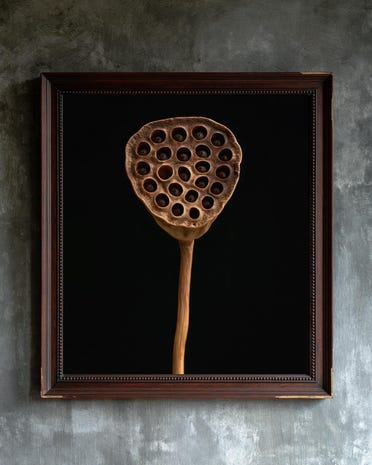
A few dried lotus pods on long stems, stood in the tallest amber bottle, give the shelf its one sculptural shape. They are real, dark brown, and strange in the way a specimen should be. Cut the stems down so the pods sit just above the shoulder of the bottle, rather than towering over it.
Keep one instrument out
The last object is the one that makes a stranger lean in: something for looking closely. A handheld magnifier with an antique copper rim and a turned wooden handle laid across the top of the drawer cabinet suggests someone was examining a seed or a pressed leaf a moment ago and put it down. It has real glass rather than acrylic, which you notice the first time you pick it up.
Lay it at an angle, never square to the shelf edge.
And the wall behind it
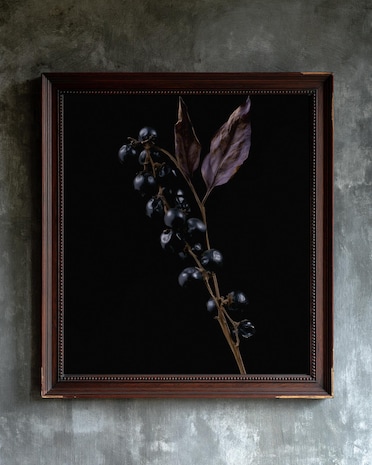
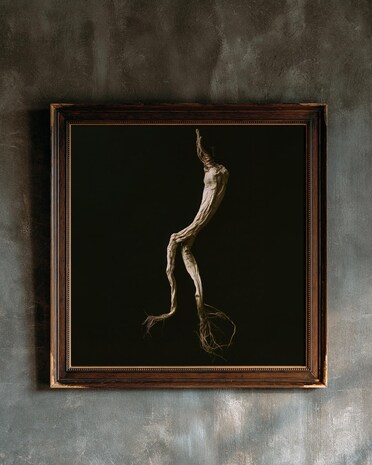
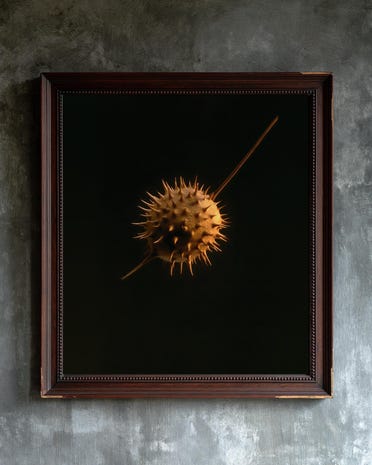
An apothecary shelf wants company above it. This is where a few framed specimens do their work: a pressed fern, a moth, a seed head photographed against true black, hung close together over the top shelf so the whole wall reads as one collection. Our own Specimen Drawer prints were made for exactly this, and if you want the framing and lighting side of it, the curiosity cabinet wall post covers the frames, the picture light and the glass cloche in detail.
The order of operations
Shelf first, then the cabinet, then one bottle, then the stone, then the seed heads, and the magnifier last. Live with it for a week before buying a second bottle. The whole charm of an apothecary shelf is that it looks accumulated, and the only honest way to get that look is to let it accumulate a little.
Nothing on it should match. Everything on it should be dark, heavy, or old enough to have earned its place. That is the whole rule.
From the shop
Prints from our own Duskwood Fell shop that suit this room. Instant digital downloads, printed at home or at any print shop.
This post contains affiliate links. If you purchase something through one of these links, Duskwood Fell may earn a small commission at no extra cost to you. Read our full Affiliate Disclosure for details.